Physical Address
Better Globe Forestry Ltd,
Kileleshwa, Nairobi, Kenya
P.O Box 823-00606
Physical Address
Better Globe Forestry Ltd,
Kileleshwa, Nairobi, Kenya
P.O Box 823-00606
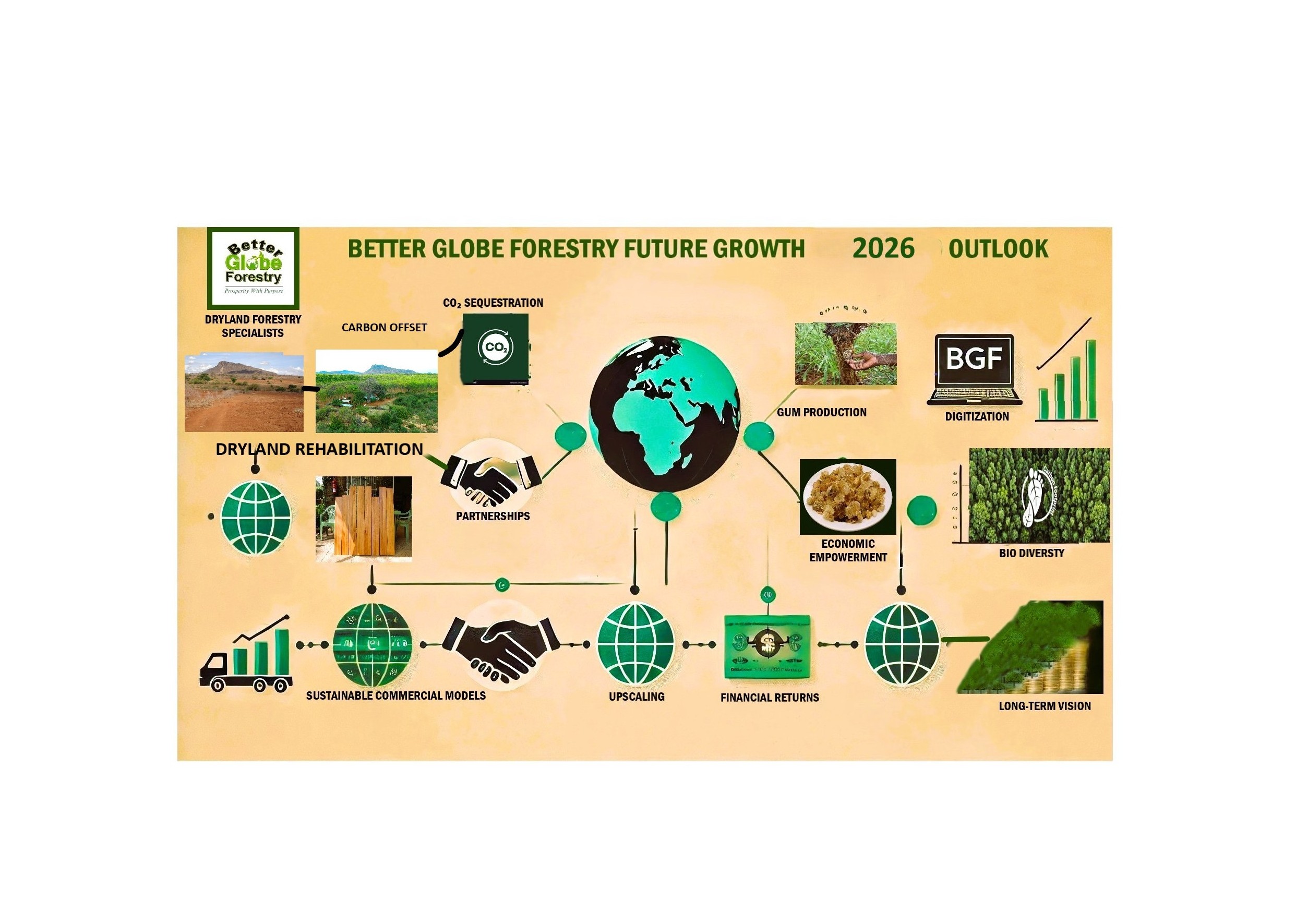
This reflection was inspired by reading an excellent article by Daniel Schwanen, “The Timidity Danger in AI Regulation” (C.D. Howe Institute).
It prompted me to think about what this debate really means in a sector I know well: forestry.
https://cdhowe.org/publication/the-timidity-danger-in-ai-regulation/
The real debate around AI is not about technology. It is about mindset.
Too often, new tools are approached primarily through the lens of what might go wrong. Systems are designed to prevent every possible risk, rather than to enable what could go right. Yet growth never comes from merely “having the ingredients” – talent, data, research. It comes from allowing them to move, combine, and be used in real-world contexts.
This matters profoundly for forestry.
Forestry is long-term, land-based, socially sensitive, and increasingly data-driven. It is now expected to deliver climate impact, biodiversity protection, transparency, and investor-grade accountability.
That demands systems capable of handling complexity over 20 to 40 years.
AI in forestry is not about replacing foresters. It is about:
· turning fragmented field data into coherent inventories,
· making long-term projects legible to investors,
· enabling monitoring, reporting, and verification at scale,
· reducing ambiguity in contracts and operations, and
· making stewardship governable in real time.
Used well, AI does not dilute responsibility.
It sharpens it. It forces coherence, exposes gaps, and accelerates institutional maturity. It helps transform good intentions into structured, auditable, and durable systems.
What forestry needs is a framework based on clear principles, protecting privacy, land rights, and integrity, while leaving room for experimentation and learning.
A purely precautionary mindset risks freezing a sector that already struggles with scale, capital, and complexity.
The real risk is not that AI moves too fast.
It is that our caution moves so slowly that forestry is never allowed to become what it could be. At Better Globe Forestry, we view AI not as a shortcut, but as a means to build stronger foundations for farmers, forests, andthe long-term stewardship our landscapes deserve.